
Categories
- Blog (81)
- Canadian warehouse (3)
- US warehouse (2)
- european union warehouse (3)
- UK warehouse (1)
- Company information (7)
- Industry information (9)
- customer service (17)
- Product information (25)
Benzocaine is an ester-type anesthetic. It is commonly used to relieve mild local pain or discomfort and is widely found in various topical medications such as lozenges, sprays, and toothpaste. As a local anesthetic, Benzocaine works by inhibiting the transmission of nerve signals to alleviate pain, making it a common choice in both medical and everyday applications.
Benzocaine’s mechanism of action is similar to other local anesthetics. It prevents sodium ions from entering nerve cells, thereby blocking the transmission of nerve impulses. Specifically, Benzocaine binds to the sodium channels on the nerve membrane, inhibiting their activation and preventing the transmission of pain signals. Since it only acts locally, it has minimal systemic effects on other parts of the body.
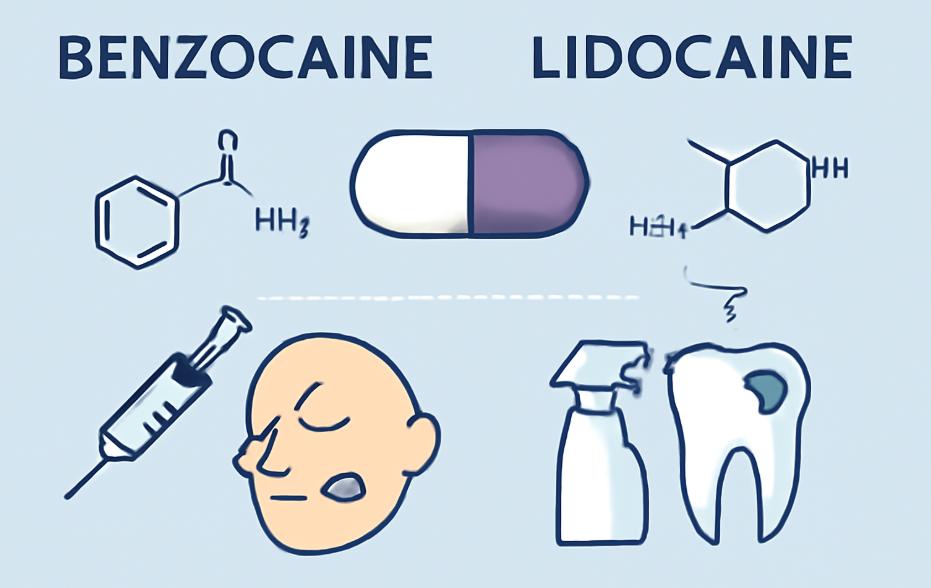
There are several significant differences between Benzocaine and other local anesthetics like Lidocaine:
Chemical Structure:
Benzocaine is an ester-type local anesthetic, while Lidocaine is an amide-type anesthetic. This difference leads to variations in their metabolic processes in the body. Benzocaine is less likely to be hydrolyzed in the body, making it suitable for short-term local anesthesia, whereas Lidocaine requires hepatic metabolism before being excreted from the body.
Metabolic Pathway:
As an ester drug, Benzocaine is rapidly metabolized, typically hydrolyzed by esterases in the plasma. In contrast, amide-type local anesthetics like Lidocaine are metabolized by the liver, with their metabolites potentially lingering in the body for a longer period. This leads to a longer duration of action for Lidocaine.
Application Range:
Benzocaine is commonly used for surface anesthesia, especially for alleviating pain in the mouth, throat, and skin. It is frequently found in products like Benzocaine lozenges and toothache sprays. Lidocaine, on the other hand, is more widely used in more complex medical procedures, such as local surgeries, dental anesthesia, and treating skin lacerations.
Side Effects and Toxicity:
Benzocaine is relatively low in toxicity, but excessive or prolonged use may cause rare side effects like “methemoglobinemia,” a condition caused by abnormal oxidation of hemoglobin. Lidocaine, due to its thorough metabolism in the body, is generally considered to have lower toxicity and is suitable for a wider range of medical uses, with fewer side effects.
Advantages:
Quick onset: Benzocaine is a fast-acting local anesthetic, ideal for situations requiring rapid pain relief.
Low toxicity: When used in appropriate doses, Benzocaine has low toxicity and is generally considered safe.
Wide application: It is widely used in topical products, effectively relieving common ailments like toothaches and sore throats.
Disadvantages:
Short duration: Due to its rapid metabolism, the anesthetic effect of Benzocaine is typically shorter than that of Lidocaine, making it more suitable for short-term use.
Side effects: While side effects are rare, excessive use can still lead to adverse reactions, especially methemoglobinemia.
Benzocaine, as a local anesthetic, provides strong anesthetic effects with low toxicity, making it widely used for pain relief in everyday situations. However, compared to Lidocaine and other local anesthetics, Benzocaine has a shorter duration of action and a more limited application range. The choice of the appropriate anesthetic should depend on the specific needs and characteristics of the drug.